I) What is mass finishing media?
Mass finishing media or abrasives are small “stones” of different types (most often ceramic or plastic), sizes and geometric shapes.
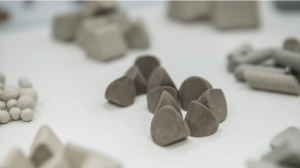
They are used for polishing or deburring parts during mass finishing or trowalizing processes.
An abrasive is a very hard material that wears away excess material through friction. This friction makes it possible to process different parts by removing more or less material.
The abrasive media transfers to the parts the friction energy generated by the mass finishing machine.
This friction ensures high-quality, highly precise processing. It produces deburred parts with a very smooth, shiny surface by removing all surface defects.
1) What is mass finishing media used for?
To achieve optimal surface treatment, it is not enough simply to have a good mass finishing machine.
You need to combine 3 elements at once:
The choice of the right trowalizing machine, the right abrasive media and the appropriate chemical additive.
To get an idea of the usefulness of abrasive media, we invite you to watch our YouTube video. It shows the use of different types of abrasive media in mass finishing processes for several types of parts.
Before / after: metal part processed by mass finishing
II) What types of mass finishing media are there?
There are more than 50 different types of abrasives offering various abrasive grades, ranging from very low to very high cutting power.
The most common are ceramic, porcelain, plastic, plant-based and metal (stainless steel balls).
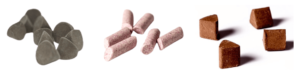
There are as many geometric shapes as there are abrasive media : angle-cut triangle, straight-cut triangle, straight-cut and angle-cut cylinder, cone, curved cone, star, tristar, angle-cut tristar, ellipse, angle-cut ellipse, arrowhead, pyramid, paracone, diamond, ball, tetrahedron, star…
One media, one purpose
Depending on its abrasive grade, each type of mass finishing media is suited to a specific application.
CERAMIC MEDIA
High-cut ceramic media are perfect for deburring, as they remove large burrs.
With medium cutting power, this type of media produces a deburred surface with lower roughness than a more aggressive media.
With low cutting power, this type of media allows parts to be cleaned and polished. Thanks to their quality material, ceramic media deliver the fastest finishing results. Due to their composition, they are very hard-wearing and versatile media.
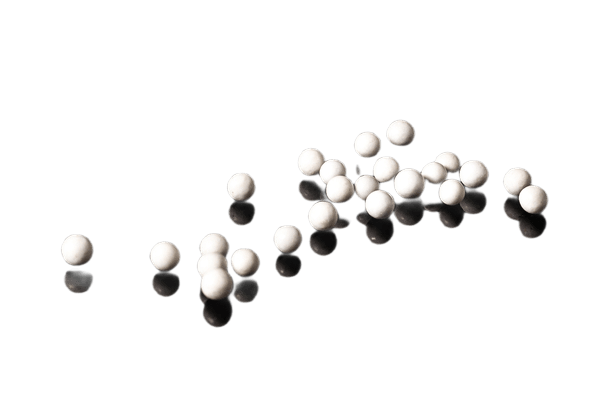
PORCELAIN MASS FINISHING MEDIA
Porcelain media is a vitrified ceramic media with zero cutting power.
It produces polishing finishes that give parts a bright shine.
It is the reference mass finishing media for the surface finishing of parts.
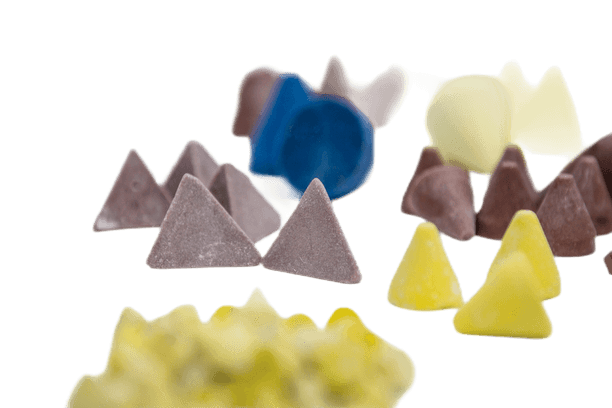
PLASTIC MEDIA
This type of media is light but very hard-wearing. Thanks to its versatility, it is suitable for all types of mass finishing machines.
Mass finishing Plastic media have a cutting power suited to fragile parts, producing a fine, smooth finish.
It is ideal for giving you the best possible results for removing light burrs and smoothing the surface of your parts, allowing you to achieve a matte or bright finish.
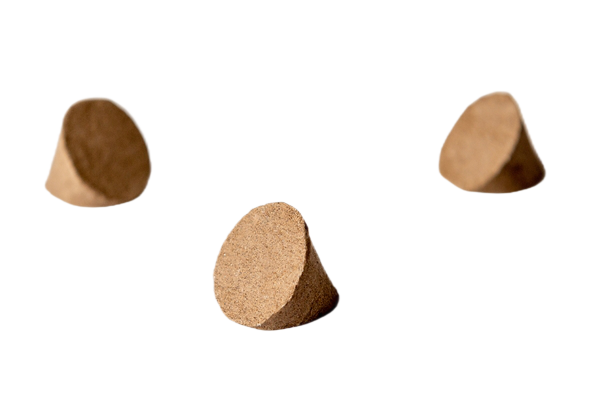
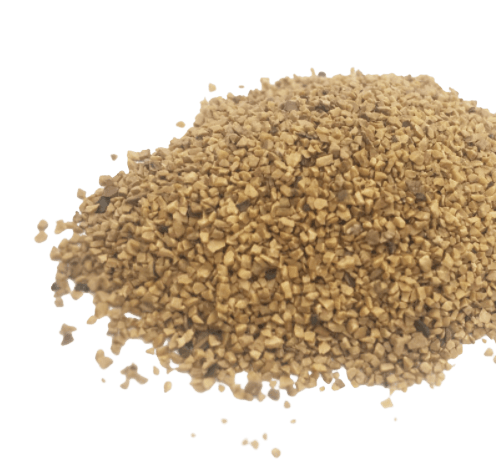
PLANT-BASED MASS FINISHING MEDIA
Mass finishing Plant-based media produce a glossy surface finish and are suited to drying and polishing parts processed by dry mass finishing.
The plant-based media range includes corn cob and walnut shells, available in different grain sizes.
Corn cob has the particularity of absorbing moisture well and being fairly resistant to abrasion. This type of media is suitable for use in machines such as vibratory and rotary dryers. Walnut shells are fibrous and offer medium cutting power.
These types of media are mainly suited to polishing and deburring applications.
III) How do you choose your mass finishing media?
It is essential to know that the mass finishing media you choose plays a very important role in the surface treatment result for the parts.
For this reason, it is extremely important to choose the abrasive media best suited to your process, which will allow you to achieve optimal, reproducible and cost-effective finishing results.
To guide you in this choice, we have gathered the most important points to take into account:
1. The type of mass finishing media
The type and shape of the media determine its cutting power and the finishing result on the parts.
Mass finishing ceramic media are particularly suited to the following applications:
- Burr removal
- Edge radiusing
- Removal of machining or casting lines
Generally, the lower the cutting power, the harder the media.
2. The shape of the mass finishing media
To choose the right consumable , you need to take into account the shape of the parts to be processed, as it determines the shape of the media to choose.
For parts with openings, tristar media are recommended, as they reduce the risk of the media getting stuck in the parts.
On the other hand, elliptical or angle-cut cylindrical media are recommended for surface improvement applications on parts with hard-to-reach areas.
3. The size and weight of the mass finishing media
When choosing abrasive media, it is essential to take into account the dimensions and weight of the media and those of the parts to be processed, as the finish quality of the parts depends largely on the choice of media size and weight.
The choice of media must also take into account the specific features of certain parts. For parts with openings, you will need to choose a type of media that will not risk getting stuck in the openings during processing.
The bigger and heavier a media is, the more powerful it will be and the more energy it will generate. A large media therefore has more bite and can easily process large parts, removing all surface defects.
Small media, on the other hand, can reach the smallest recesses of the parts, offering more precise processing.
In all cases, the size of the mass finishing media must be different from that of the parts to be processed, so that they can easily be separated by screening at the end of the mass finishing treatment.
However, when the parts are smaller than the media, a reverse screening system will be needed.
4. The hardness of the mass finishing media
To avoid damaging the parts, it is essential to take into account the material they are made of as well as the hardness of the media.
Ceramic and plastic media differ mainly in their density.
High-cut ceramic media are denser than Plastic media.
This characteristic could potentially increase the risk of damaging parts made from soft materials, as ceramic can leave marks on the surface.