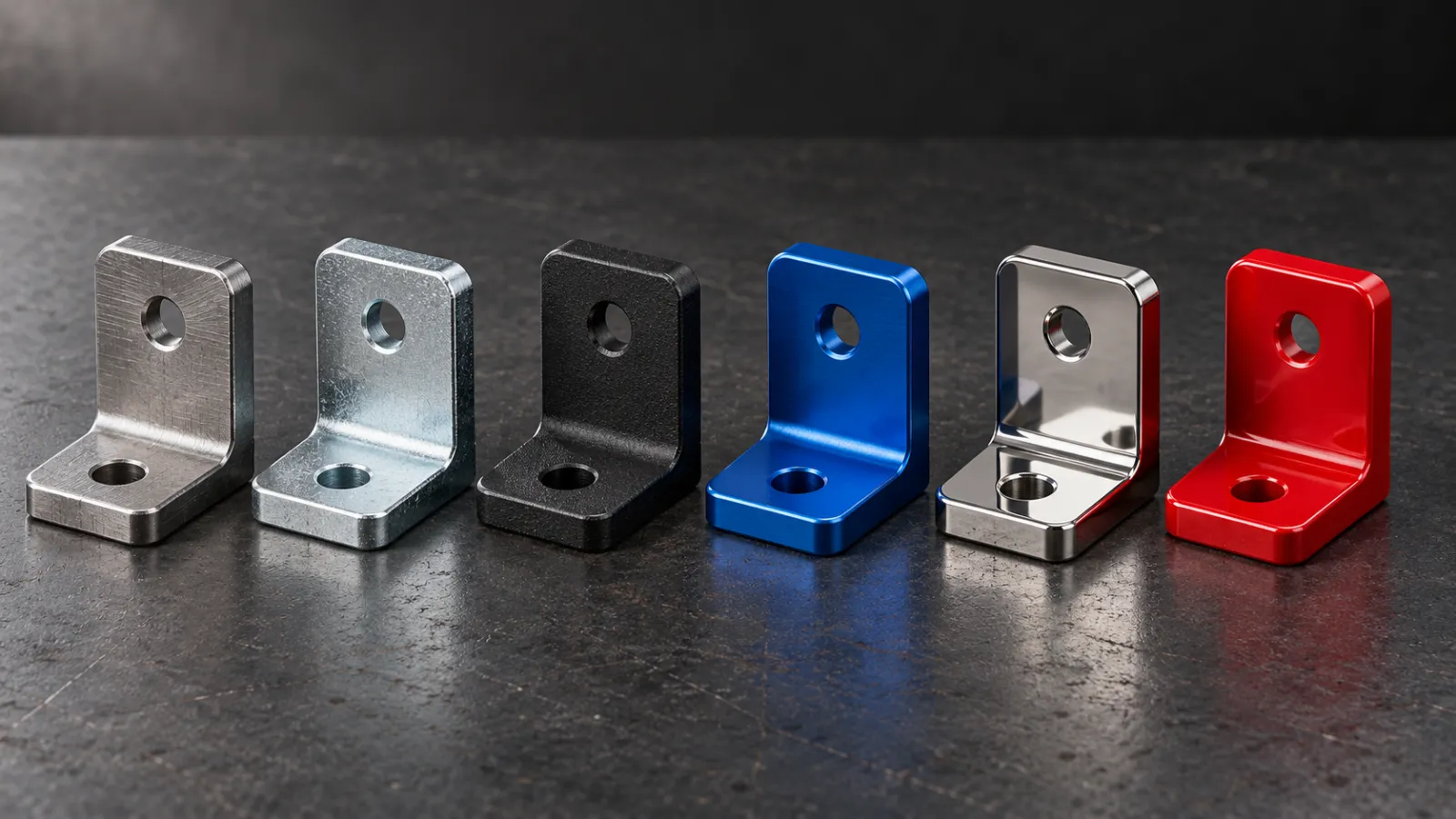
Metal surface treatment is an essential step in many industries. It prepares metal surfaces before the application of coatings or specific treatments. In this article, we will explore in detail the different types of metal surface treatment, their advantages and their applications in various industrial sectors.
In short
Metal surface treatment covers the processes that modify the surface of a metal part without changing its geometry: to protect it from corrosion, improve its appearance, make it more wear-resistant or prepare it to receive a coating. There are four families: mechanical treatments (mass finishing, polishing, shot blasting), chemical and electrochemical treatments (phosphating, anodizing, electropolishing), coatings (zinc plating, chrome plating, painting) and heat treatments.
What is metal surface treatment?
Metal surface treatment refers to all the processes used to modify the surface properties of a metallic material. These treatments can have several objectives, such as improving appearance, durability, corrosion resistance or electrical conductivity.
At first glance, there are many metal surface treatment processes. Among the most commonly used are mass finishing, polishing, chrome plating, anodizing, zinc plating, phosphating and industrial painting.
Mass finishing
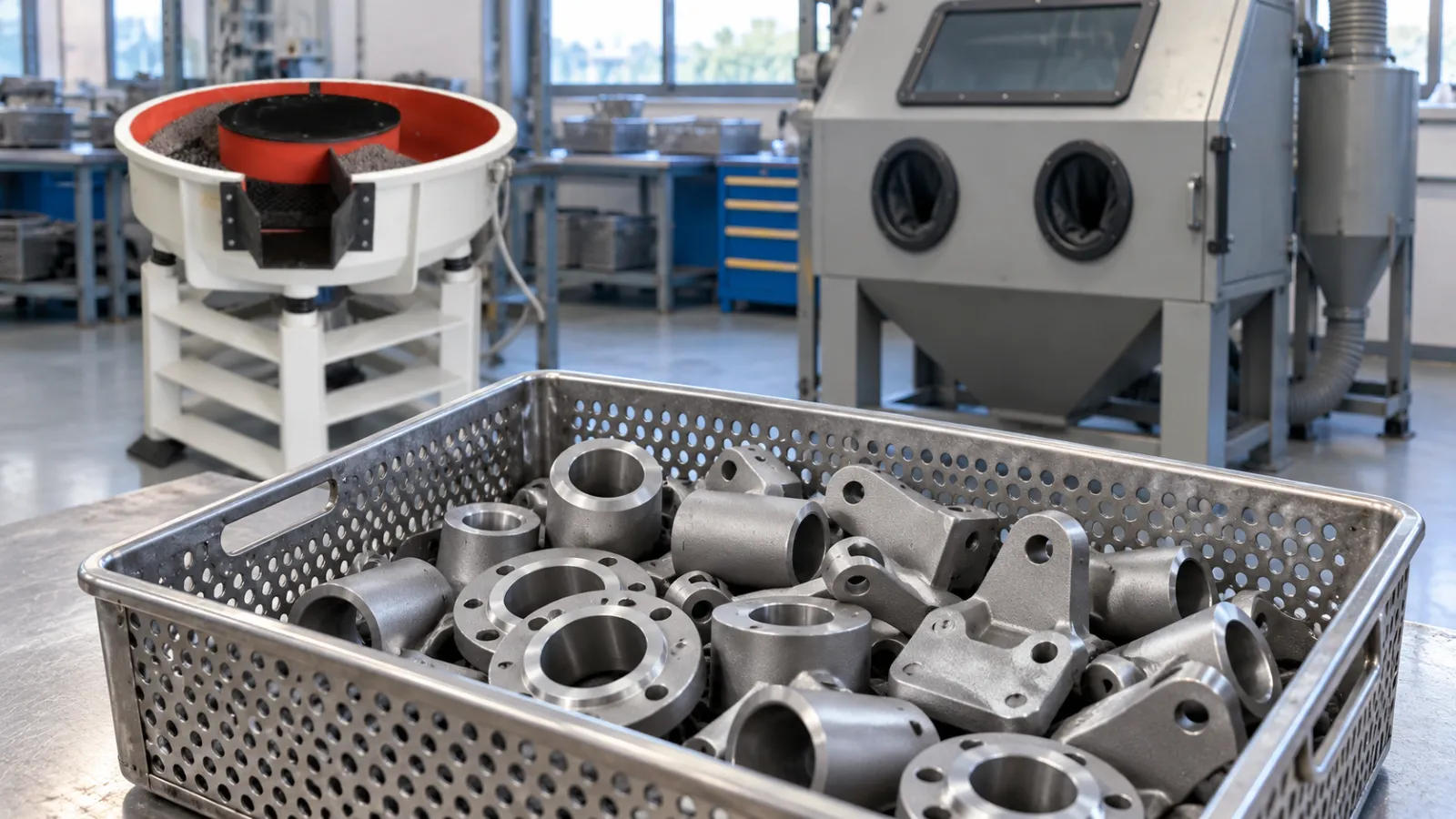
Mass finishing is a surface treatment process that involves setting in motion parts and abrasive media. This process improves surface quality by reducing roughness and irregularities. To optimize efficiency, the cycle time is determined in order to obtain the best results. Moreover, mass finishing is one of the most effective metal surface treatment methods. Thanks to its expertise, Finishtech offers a wide range of mass finishing machines. We work with the British manufacturer Acton Finishing to supply you with the best machines.
In practice, the parts are placed in a bowl with abrasive media (ceramic, plastic or organic) and a liquid compound, then set in motion by vibration or centrifugal force. Depending on the media and the cycle time, the same process is used to deburr, radius edges, smooth, polish or burnish. It is a mechanical treatment: it adds no layer and often prepares the part to receive a coating. For the choice of machine for your parts, see our industrial deburring page.
Key point: mass finishing treats parts in series, repeatably, on steel, stainless steel, aluminium, brass or titanium.
Polishing
Polishing, for its part, aims to give a shiny and smooth finish to a metallic material. It is a process of thorough cleaning of the surface using abrasive tools. It removes imperfections, scratches and surface defects, while improving light reflection.
A distinction is made between mechanical polishing, carried out with belts, wheels, felt or by mass finishing, and electrolytic polishing, or electropolishing, which dissolves micro-roughness in a bath. The surface finish obtained is measured as roughness (Ra), from satin to mirror polish, below 0.1 µm. Our pages on metal polishing, stainless steel polishing and mirror polishing detail the methods.
Key point: polishing improves appearance and makes cleaning easier, but on its own does not protect plain steel from corrosion.
Chrome plating
Chrome plating is a process of coating a metal object with a thin layer of chromium. It can serve both decorative and functional purposes. Chrome plating is generally carried out by electroplating in an electrolytic bath. As a result, it offers excellent protection against corrosion and improves the resistance of the material over time.
Decorative chrome is a very thin layer, usually deposited over nickel for shine, while hard chrome is thicker and used for wear and friction resistance: cylinder rods, shafts, tooling. Hexavalent chromium baths, historically the most common, are subject to authorisation under the European REACH regulation, which is pushing manufacturers towards alternatives.
Key point: chrome plating reproduces the defects of the substrate; the surface must be perfectly prepared before deposition.
Anodizing
Anodizing is a surface treatment commonly used on light metals such as aluminum. It consists of forming a protective oxide layer on the metal surface by electrolysis. Anodizing improves the corrosion resistance of aluminum while offering the possibility of coloring the surface. This treatment is widely used in the automotive, aerospace and other sectors where lightness and strength are important criteria.
Standard anodizing produces a layer from a few microns to a few tens of microns; hard anodizing, which is thicker, targets wear resistance. The oxide layer is part of the metal: it does not flake like paint, but it leaves surface defects visible. That is why parts are often deburred, satin-finished or polished before anodizing.
Key point: anodizing mainly concerns aluminium and titanium; it does not apply to steel.
Metal surface treatment by zinc plating
Zinc plating is a process of coating with a layer of zinc to protect the metal from corrosion. It can be carried out using different processes, such as hot-dip galvanizing , electrogalvanizing or mechanical galvanizing. It therefore offers excellent protection against galvanic corrosion and extends the service life of metal parts.
Hot-dip galvanizing, by immersion in a bath of molten zinc at around 450 °C, gives a thick layer suited to structures and parts exposed outdoors. Electro-galvanizing deposits a thinner, more even layer, often completed by passivation, for fasteners and small parts. Zinc protects steel sacrificially: it corrodes in its place.
Key point: zinc plating concerns steel; careful degreasing and pickling determine how well the layer holds.
Metal surface treatment by phosphating
Phosphating is a chemical treatment commonly used for ferrous metals and alloys. It consists of altering the metal surface with phosphate crystals that bond chemically to the metal substrate. In addition, phosphating improves the corrosion and wear resistance of the material. It is an ideal treatment for parts intended to be painted.
The main types are zinc phosphating, a bonding base for paint, manganese phosphating, which retains oil and helps the running-in of parts in friction, and iron phosphating, which is lighter. The layer is matte and porous: on its own it offers little protection; it is its combination with a paint or an oil that makes it perform.
Key point: phosphating is above all a preparation treatment.
Industrial painting
Industrial painting is a process used in many industrial sectors. It consists of applying a paint coating to the metal surface to improve the appearance, resistance to corrosion and durability of the material. There are also different types of industrial paint, such as liquid paint, powder coating and cataphoresis (e-coating).
Powder coating is cured in an oven and gives a thick, resistant film; e-coating (cataphoresis), applied by electrodeposition, also covers recessed areas and often serves as a primer in the automotive industry. In all cases, how well the paint holds depends on the preparation: degreasing, shot blasting or phosphating.
Key point: paint applied to a poorly prepared surface ends up blistering or flaking, whatever its quality.
Comparison table of metal surface treatments
The seven processes above are not the only ones. The table below places them among the other common treatments, by family and by purpose.
| Process | Family | Main purpose | Common metals |
|---|---|---|---|
| Mass finishing | Mechanical | Deburring, smoothing, polishing, burnishing in series | Steel, stainless steel, aluminium, brass, titanium |
| Shot blasting | Mechanical | Descaling, preparation before painting, compressive stress | Steel, cast iron, stainless steel, aluminium |
| Mechanical polishing | Mechanical | Appearance, low roughness | All metals |
| Electropolishing | Electrochemical | Fine smoothing, cleanliness | Mainly stainless steel |
| Anodizing | Electrochemical | Corrosion, wear, colouring | Aluminium, titanium |
| Phosphating | Chemical | Paint adhesion, oil retention | Steel, cast iron |
| Passivation | Chemical | Reinforcing the protective layer of stainless steel | Stainless steel |
| Zinc plating, galvanizing | Coating | Sacrificial corrosion protection | Steel |
| Nickel plating | Coating | Corrosion, wear, decorative undercoat | Steel, copper, brass |
| Chrome plating | Coating | Shine (decorative) or hardness (hard chrome) | Steel, brass |
| Gold and silver plating | Coating | Electrical conductivity, appearance | Copper, brass |
| Powder coating, e-coating | Coating | Protection and appearance | Steel, aluminium |
| Hardening, nitriding | Thermal | Hardness, wear resistance | Steels |
Finishtech works on mechanical treatments: mass finishing, polishing and shot blasting, with the corresponding machines, media and compounds. Chemical treatments and coatings are the domain of specialised workshops, but their success almost always depends on the mechanical preparation that precedes them.
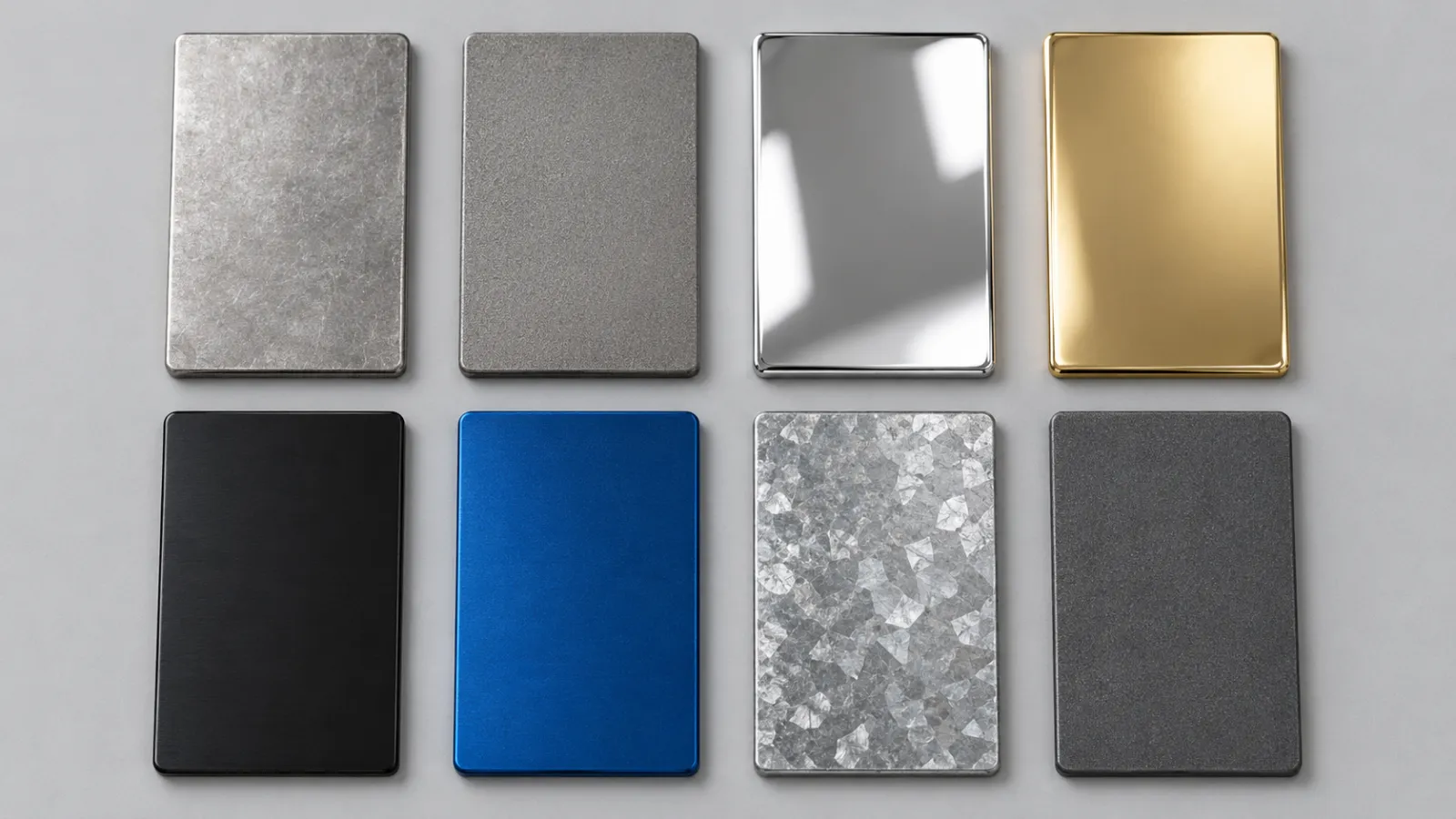
Surface preparation: the step that determines the result
A coating is never better than the surface it is applied to. Before zinc plating, anodizing, chrome plating or painting, the part must be clean, free of burrs and have a suitable roughness. Metal surface preparation generally involves three operations:
- Degreasing, to remove cutting oils and machining residues.
- Mechanical preparation: deburring and smoothing by mass finishing, shot blasting or sandblasting to descale and create an anchoring roughness.
- Pickling or chemical activation, just before treatment, to remove oxides.
The mechanical step is where Finishtech comes in: our mass finishing and shot blasting machines treat parts in series before they go to the treatment line, with the same result from one batch to the next.
Which surface treatment for which metal?
Steel and cast iron
Plain steel rusts: it needs protection. The usual choices are zinc plating or galvanizing, phosphating followed by paint, or e-coating. For parts subject to friction, nitriding, hard chrome or manganese phosphating are used. Shot blasting or mass finishing prepare the surface beforehand.
Stainless steel
Stainless steel protects itself thanks to its passive layer. Its surface treatment therefore mainly targets appearance and cleanliness: polishing, satin finishing, electropolishing, then passivation to reinforce the protective layer after machining. Mass finishing treats parts in series, from satin to mirror polish. See mass finishing of stainless steel and stainless steel polishing.
Aluminium
Aluminium is anodized or powder coated. Before anodizing, the surface finish matters: a scratch or a burr remains visible under the oxide layer. Our guide to aluminium surface treatment compares the options.
Copper, brass and bronze
These alloys are burnished, nickel-plated, chrome-plated or gold-plated. In plumbing fittings and turned parts, burnishing by mass finishing gives the shine before any plating.
Titanium
Titanium naturally resists corrosion. It is treated for its surface finish (polishing, mass finishing), for its colour (anodizing) or, in medical applications, to promote bone attachment. See mass finishing for the medical and aerospace sectors.
How to choose the right surface treatment
The right treatment follows from the purpose, the metal and the environment in which the part will be used. Four questions are enough to guide the choice:
- Does it need corrosion protection? Zinc plating or galvanizing for steel, anodizing for aluminium, passivation for stainless steel, paint as a complement.
- Does the appearance need improving? Polishing, burnishing, decorative chrome, coloured anodizing.
- Does it need to resist wear or friction? Hard chrome, nickel plating, hard anodizing, nitriding, manganese phosphating.
- Does a coating need preparing? Deburring, mass finishing, shot blasting, phosphating.
In practice, a part often receives a combination: mechanical preparation, a chemical treatment, then a coating. The specification (standard, thickness, salt spray resistance, roughness) then sets the parameters of each step.
The advantages of metal surface treatment
Metal surface treatment offers many advantages in various industrial sectors. Here are some of the main advantages:
- Corrosion protection : first, surface treatments such as zinc plating, anodizing and phosphating offer excellent corrosion protection, which extends the service life of metal parts.
- Improved appearance : next, polishing, chrome plating and industrial painting improve the appearance of metal parts, making them more visually attractive.
- Wear resistance : some surface treatments, such as shot blasting and phosphating, improve the wear resistance of metal parts, which increases their durability and longevity.
- Improved mechanical properties : in addition, some surface treatments improve the mechanical properties of metals, such as tensile strength and hardness.
- Preparation for other treatments : surface treatment also prepares metal parts for other treatments, such as painting, bonding or welding, by improving adhesion and chemical compatibility.
Applications of metal surface treatment
Metal surface treatment is widely used in many industries. Here are some of the most common applications :
- Automotive industry : surface treatment is essential in the automotive industry to protect parts against corrosion and improve their appearance.
- Construction industry : it is used to protect building materials against corrosion and physical damage.
- Electrical industry : here, it is used to improve the electrical conductivity of parts and protect them against corrosion.
- Medical industry : it is used in the manufacture of medical equipment to ensure biocompatibility and corrosion resistance.
- Aerospace industry : metal surface treatment is essential in the aerospace industry to improve the corrosion resistance and durability of aeronautical components.
- Food industry: it is also used to guarantee the hygiene and corrosion resistance of equipment used in the food industry.
These applications represent only a fraction of the many uses of metal surface treatment in different industrial sectors.
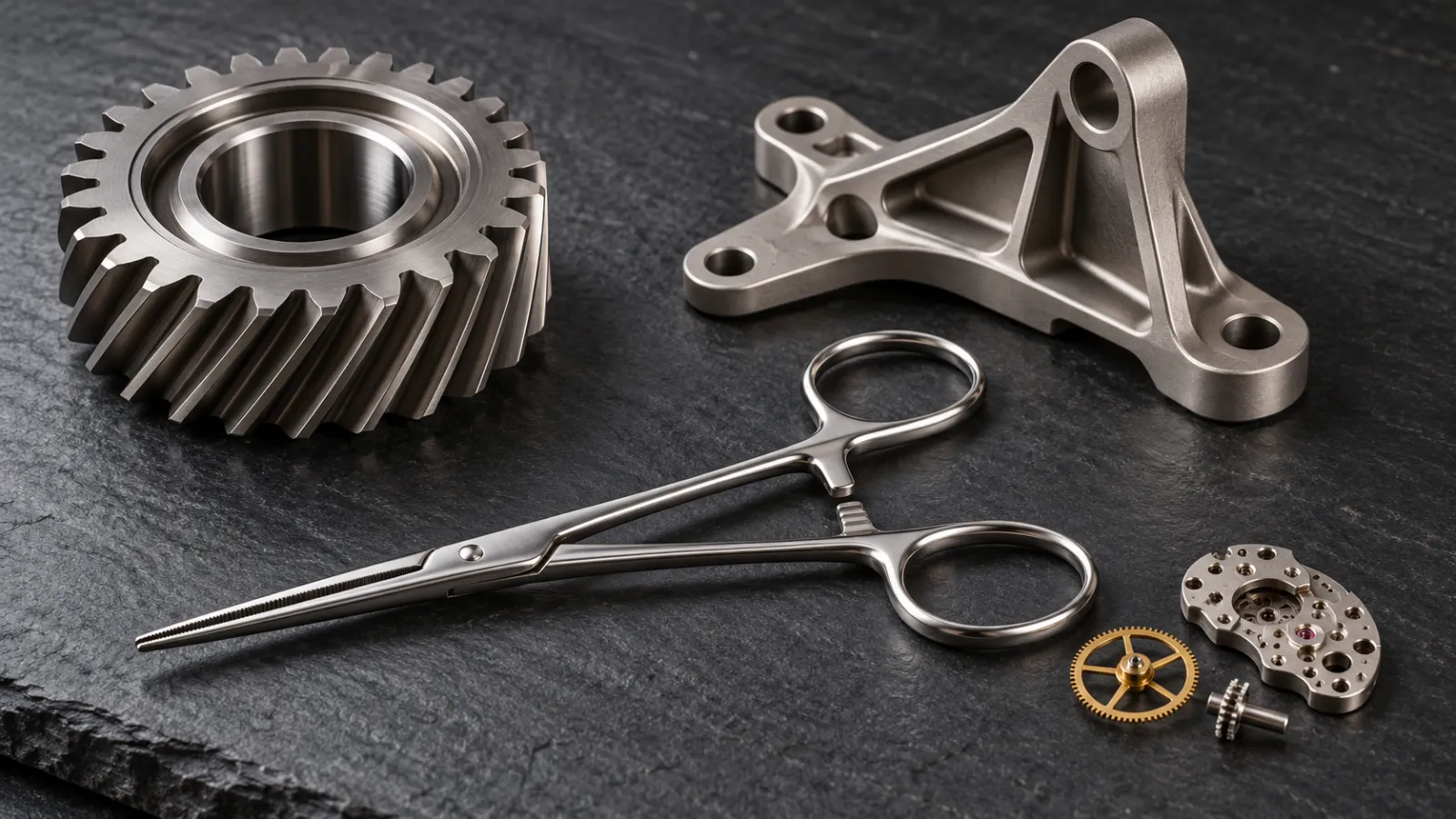
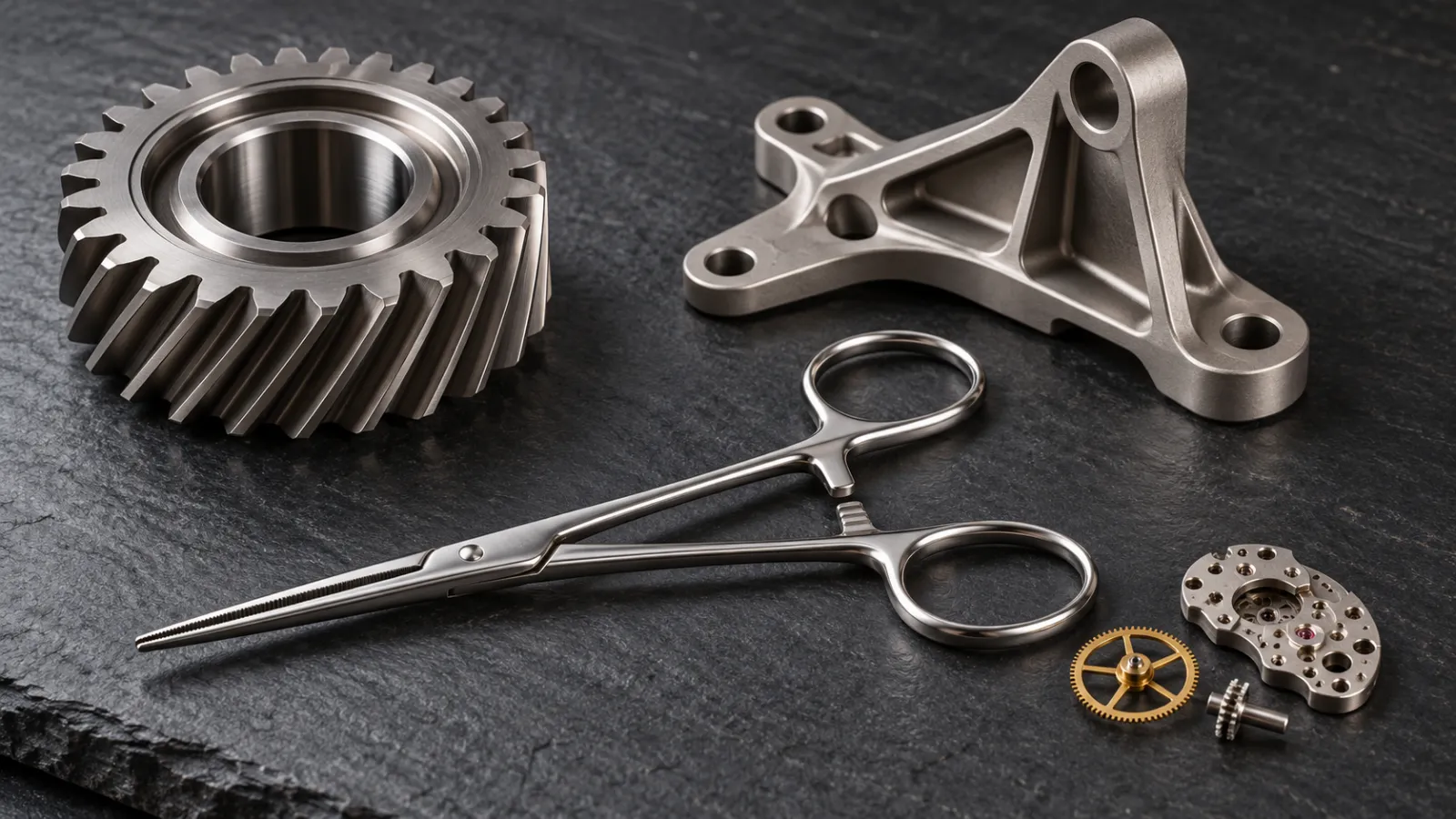
Requirements vary widely from one sector to another: cleanliness and measured surface finish in the medical and aerospace sectors, very fine finishes in watchmaking, high volumes and corrosion resistance in the automotive industry. In all cases, deburring the parts remains an essential step before treatment.
Frequently asked questions about metal surface treatment
What are the different types of surface treatment?
They fall into four families: mechanical treatments (mass finishing, polishing, shot blasting), chemical and electrochemical treatments (phosphating, passivation, anodizing, electropolishing), deposited coatings (zinc, nickel, chrome, paint) and thermal or thermochemical treatments (hardening, nitriding).
Which surface treatments for steel?
Against corrosion: zinc plating, hot-dip galvanizing, phosphating followed by paint, e-coating. Against wear: hard chrome, nitriding, manganese phosphating. In all cases, the steel is first degreased and mechanically prepared, by shot blasting or mass finishing.
What is the surface treatment trade?
Surface treaters are workshops that apply these processes on behalf of manufacturers, or departments integrated into factories. Their operators run the baths, booths or machines and check thicknesses and surface finishes. Finishtech, for its part, supplies the machines and consumables for mechanical treatments.
What is the treatment of metal called?
There is no single name. Surface treatment refers to what modifies the surface (galvanizing, anodizing, chrome plating, polishing) and heat treatment to what modifies the metal in its mass (hardening, tempering, annealing). The term therefore depends on the process.
What is the difference between a surface treatment and a coating?
Strictly speaking, a surface treatment modifies the surface of the metal itself (polishing, anodizing, phosphating), whereas a coating adds a layer of another material (zinc, nickel, chrome, paint). The two are often combined: the surface is first treated, then coated.
Which surface treatment against corrosion?
It depends on the metal: zinc plating or galvanizing for steel, anodizing for aluminium, passivation or electropolishing for stainless steel. Paint or e-coating reinforces the protection, provided the surface has been properly prepared.
Conclusion
Metal surface treatment is an essential step in many industries. It improves appearance, durability, corrosion resistance and the mechanical properties of metal parts. Thanks to a wide range of surface treatment processes, it is possible to meet the specific needs of each industry. Whether for the automotive, construction, electrical or medical industry, metal surface treatment plays a crucial role in manufacturing high-quality, durable products.
Finishtech supports manufacturers on the mechanical side of surface treatment: mass finishing, polishing and shot blasting, with machines and consumables suited to your parts. To discuss it, contact us.